Content strategy
How to Choose Video Content That Makes People Want More
Choose short-video content that earns relevant attention. Evaluate audience fit, useful payoffs and the next question that leads viewers to your profile.
Who this is for
Creators choosing which ideas and moments deserve to become short videos.
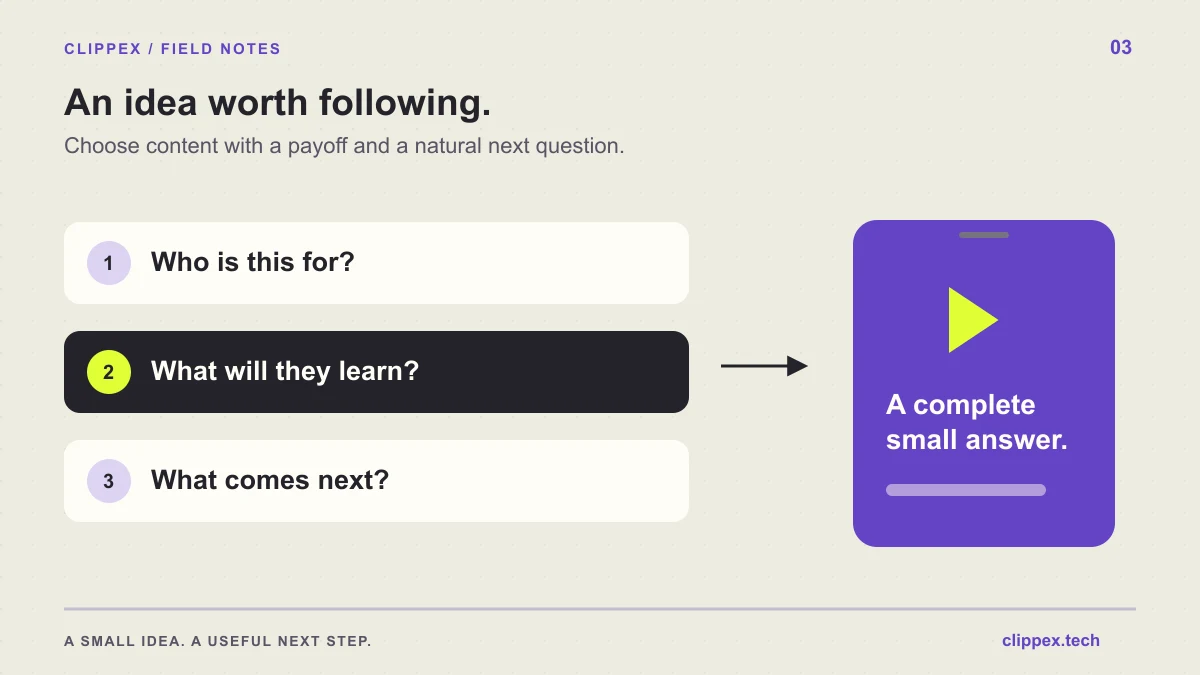
Choose video content by asking what the viewer will understand, feel or be able to do after watching. Then ask which related question they might want answered next. A strong clip delivers its own payoff and introduces a larger topic that your profile can genuinely help them explore.
Give a complete answer to a small question, then make the next useful question easy to discover.
Begin with an audience question, not a broad topic
'Photography' is a category. 'Why do my indoor portraits look flat?' is a question that can organize a clip. A specific question helps you identify the opening, the necessary evidence and the point at which the explanation is complete.
Collect questions from your own comments, customer conversations, lessons and previous videos. Group repeated questions by the situation behind them. A beginner choosing a camera and an experienced photographer choosing a studio workflow may use similar words but need different examples.
Use three checks before you open the editor
Evaluate candidates against the same criteria so a dramatic moment does not automatically outrank a useful one. You can mark each check as clear, needs work or missing. These labels are an editorial worksheet, not a prediction of platform performance.
- Audience fit: would the person you want to reach recognize a problem, interest or ambition here?
- Payoff: does the source offer an answer, demonstration, insight or emotional resolution?
- Continuation: is there a relevant next resource or related topic on your profile?
Deliver the answer before asking for more attention
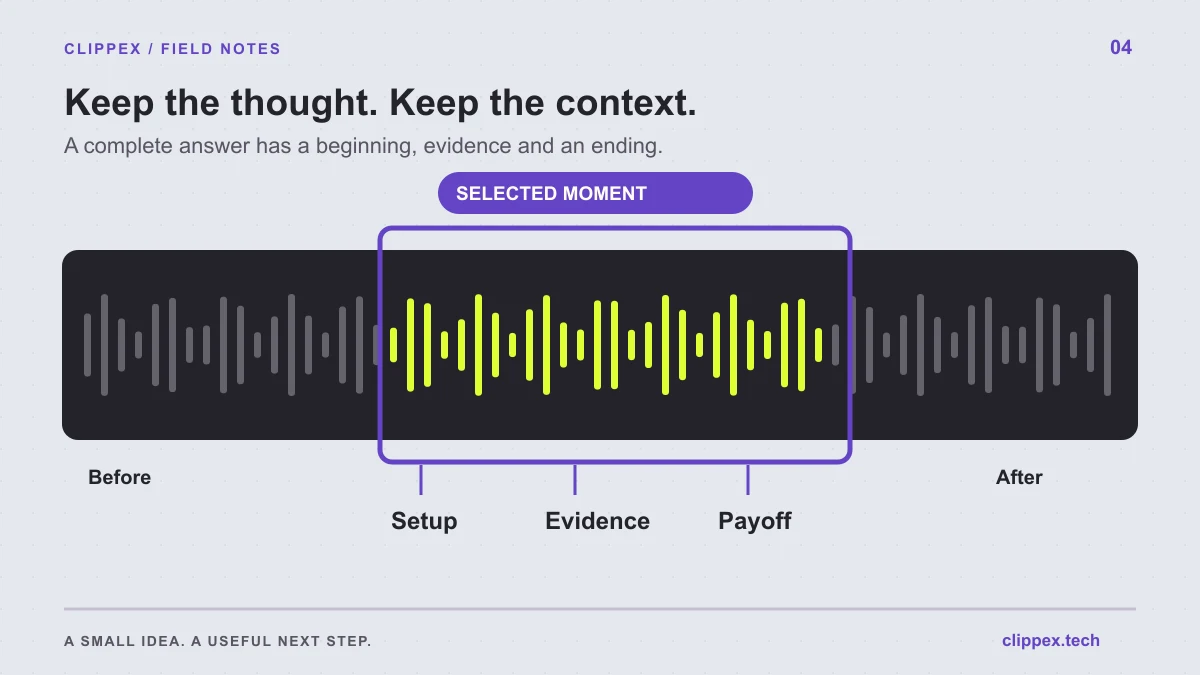
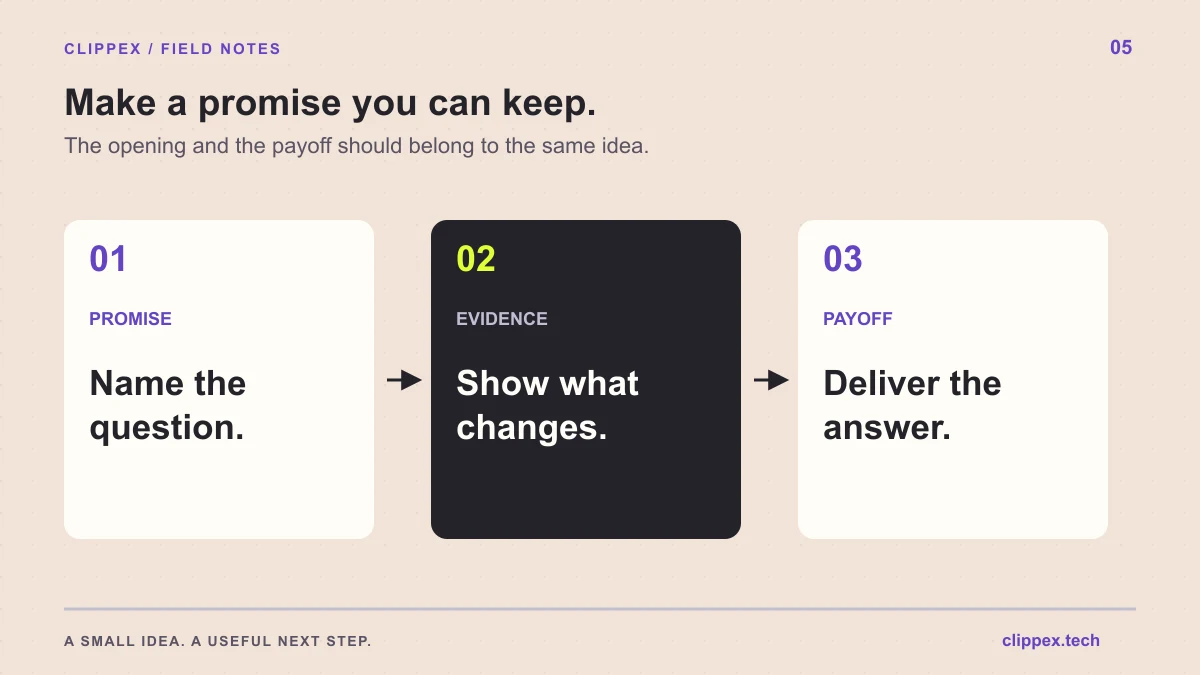
A curiosity gap works when the opening raises a question that the video resolves. If the clip only promises a secret and sends the viewer elsewhere for the entire answer, it gives them little evidence that the next destination will be useful.
Teach one step completely and make the larger process visible. For example, show how to soften a harsh light, then explain that your longer tutorial compares three room setups. The viewer receives something useful now and can choose whether the next level is relevant.
Choose content that belongs on the profile it promotes
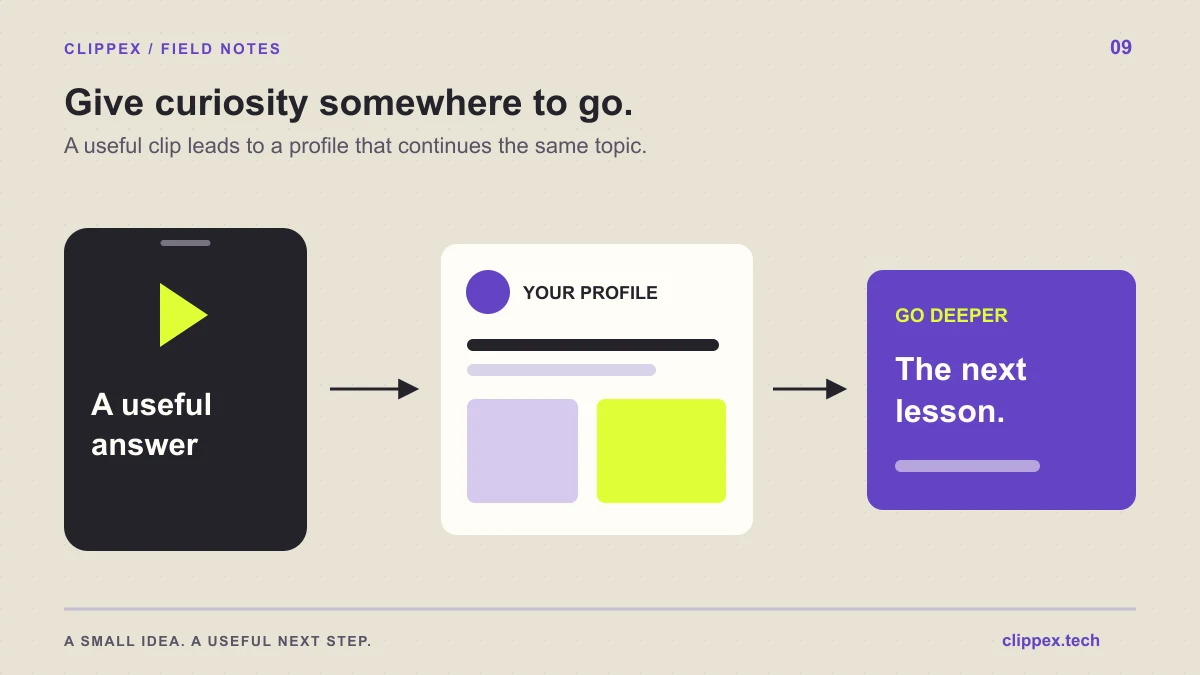
Imagine someone opens your profile immediately after the clip. Your bio, visible posts and linked resource should confirm the subject they came for. A creator whose clip teaches editing should make editing advice easy to find, even if the account also covers other interests.
Before publishing a new topic, prepare a small destination: a pinned introduction, a related tutorial or a clearly named collection. You do not need a huge library. You need enough continuity that a viewer understands why this clip came from you.
Check whether the recording can support the idea
An excellent topic can still make a weak clip if the recording lacks a clear answer. Listen to the candidate section without relying on your memory of the full video. Keep the conditions, examples and qualifications that the speaker needs to make the point accurately.
Use Clippex to surface possible scenes from an appropriate recording, then apply your editorial checks. Do not treat a scene score as evidence that the clip fits your audience. If no candidate delivers the promised answer cleanly, record a short explanation or choose a different source.
Turn viewer responses into the next content brief
After publishing, look for signs of relevant interest: viewers asking how to apply the idea, saving the explanation, exploring related posts or reaching the promised resource. Compare these signals across clips on similar subjects rather than treating every view as an equivalent outcome.
Keep a simple note for each post: audience question, payoff, next step and follow-up questions. If viewers repeatedly ask the same thing after watching, that may reveal a missing explanation or the subject of your next clip. Use that evidence to build a connected series instead of chasing an unrelated trend.