Content strategy
How to Write Short-Video Hooks Without Clickbait
Write short-video hooks that make a clear promise and deliver it. Use questions, demonstrations and specific contrasts to introduce useful content.
Who this is for
Creators improving the opening of tutorials, interviews and educational clips.
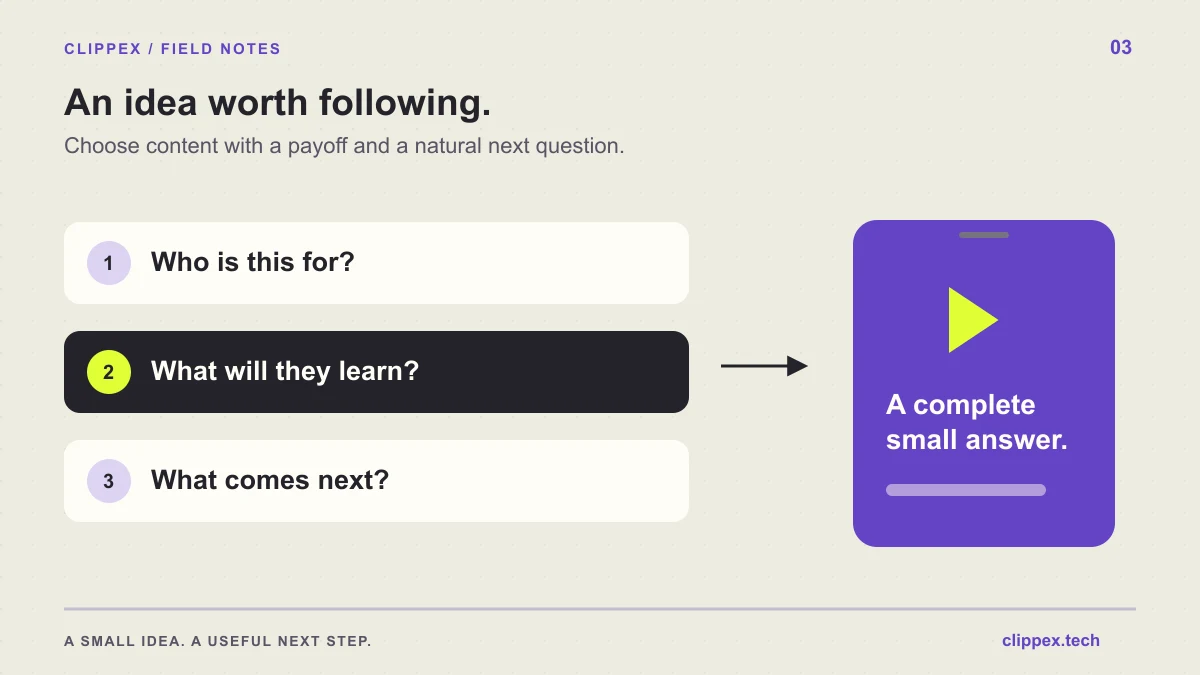
A short-video hook tells the viewer why the next few moments are relevant. It can be a question, a visible result or a specific observation. The strongest opening for your clip is one that accurately sets up the answer already present in the source, without exaggerating what the viewer will learn.
Make the opening promise specific enough to recognize and small enough to deliver in the clip.
Start with the answer you can actually deliver
Before writing the opening, finish this sentence: 'After watching, the viewer will understand...' If the answer contains several unrelated lessons, narrow the clip. A focused outcome gives the opening something concrete to promise.
A video showing how to position a microphone can promise a clearer recording setup. It cannot honestly promise to make someone a successful podcaster. The smaller promise is more useful because a viewer can see whether you fulfilled it.
Choose an opening that suits your evidence
Different sources support different kinds of hooks. A demonstration can start with the result. An interview answer can start with the problem it solves. A comparison can start with the difference the viewer should notice. Use the structure that helps someone enter the material with the least confusion.
- Question: 'Why does your voice sound distant even with a good microphone?'
- Demonstration: 'Listen to the same sentence before and after moving the mic.'
- Specific contrast: 'The room stayed the same. Only the microphone distance changed.'
- Mistake and correction: 'Before you buy another mic, check where this one is sitting.'
Remove the delay before the useful point
Long greetings, repeated introductions and explanations of why you decided to make the video can postpone the answer. Begin where the audience recognizes the subject. You can still sound human and welcoming without making every new viewer sit through the setup of the original recording.
For an existing interview, choose a passage that opens cleanly. If you add introductory text during finishing, make it faithful to the speaker's answer. Do not turn a careful observation into an absolute claim just because a stronger phrase looks more striking on screen.
Create curiosity with a real missing explanation
A useful curiosity gap gives the viewer a clear question and a reason to expect an answer. Show two different results, identify the variable or introduce a decision with an unexpected consequence. Then use the body of the clip to resolve that uncertainty.
Avoid empty setups such as 'You will not believe this secret' when the source contains ordinary advice. They spend attention without telling viewers whether the subject matters to them. Specificity helps the right person recognize relevance before they decide to keep watching.
Compare openings without changing everything else
If you want to learn which opening communicates better, compare versions that keep the topic, payoff and destination similar. Note exactly what changed: the first sentence, the first visible frame or the opening text. A small set of observations is more interpretable than a completely different video each time.
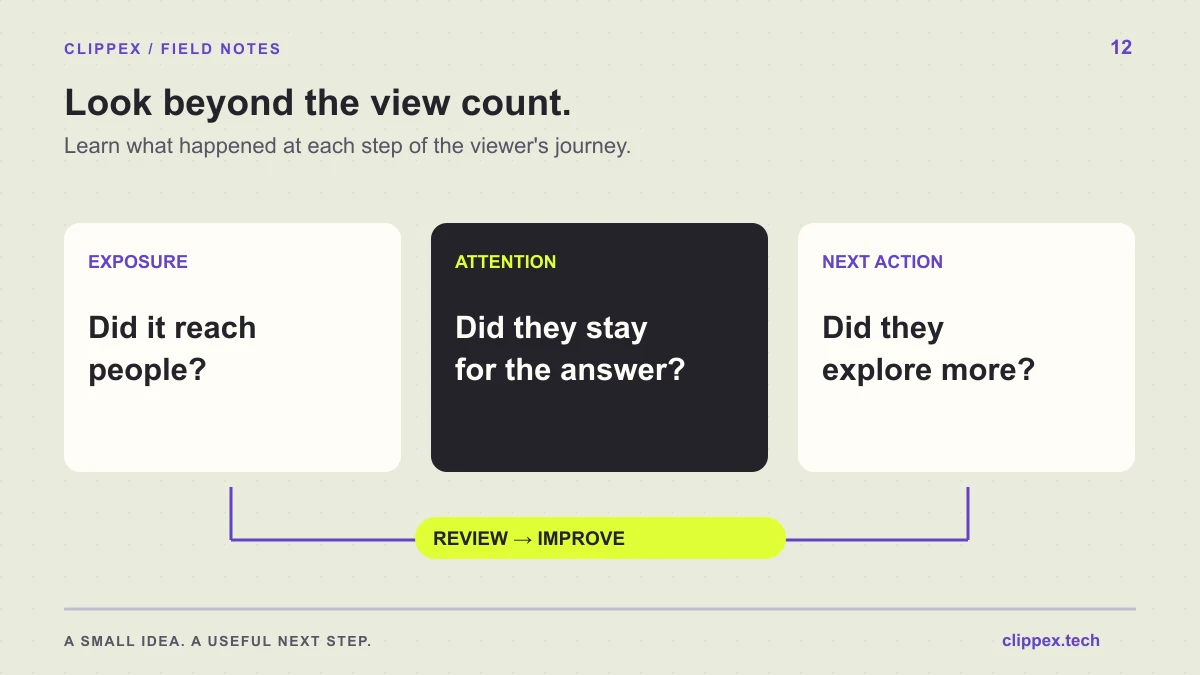
Review whatever retention information your publishing platform provides alongside the quality of comments and the next actions you care about. A hook that attracts unrelated viewers may earn attention while producing little interest in your actual work. Treat the result as evidence about that post, not a universal formula.
Close the loop before the call to action
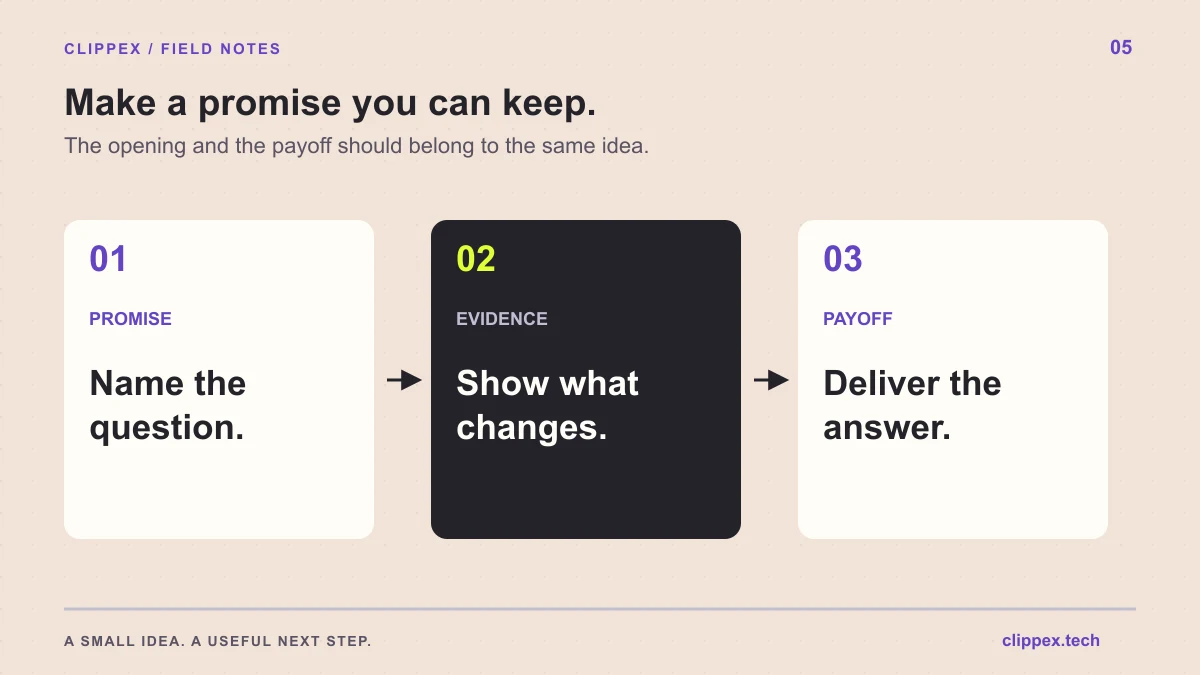
Replay the opening and ending together. Does the final explanation answer the initial question? If the clip changes subjects halfway through, tighten the promise or choose a different passage. A viewer should not have to visit your profile to find out whether the claim was true.
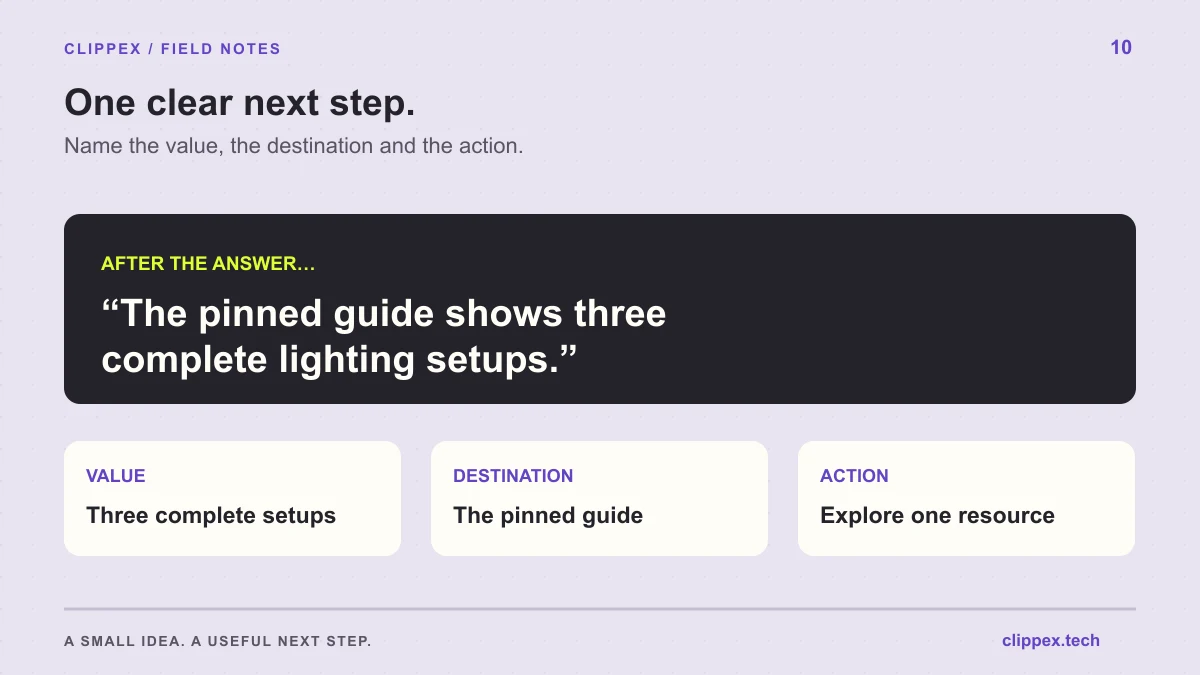
Once the answer is complete, name a useful continuation. A microphone-positioning clip can lead to a room-setup guide. The next step feels natural because it helps the viewer apply or extend what they just learned.