Growth
How to Measure Short-Video Performance Beyond Views
Measure whether your short videos attract the right audience. Track watch behavior, profile visits and useful next actions with a simple weekly review.
Who this is for
Creators and small teams evaluating whether a short-video routine is working.
Measure short-video performance against the purpose of each post. Views help describe exposure, but your goal may be to teach an idea, attract relevant profile visits or introduce a longer resource. Choose the outcome first, use the data your platform actually provides and review similar posts over consistent time windows.
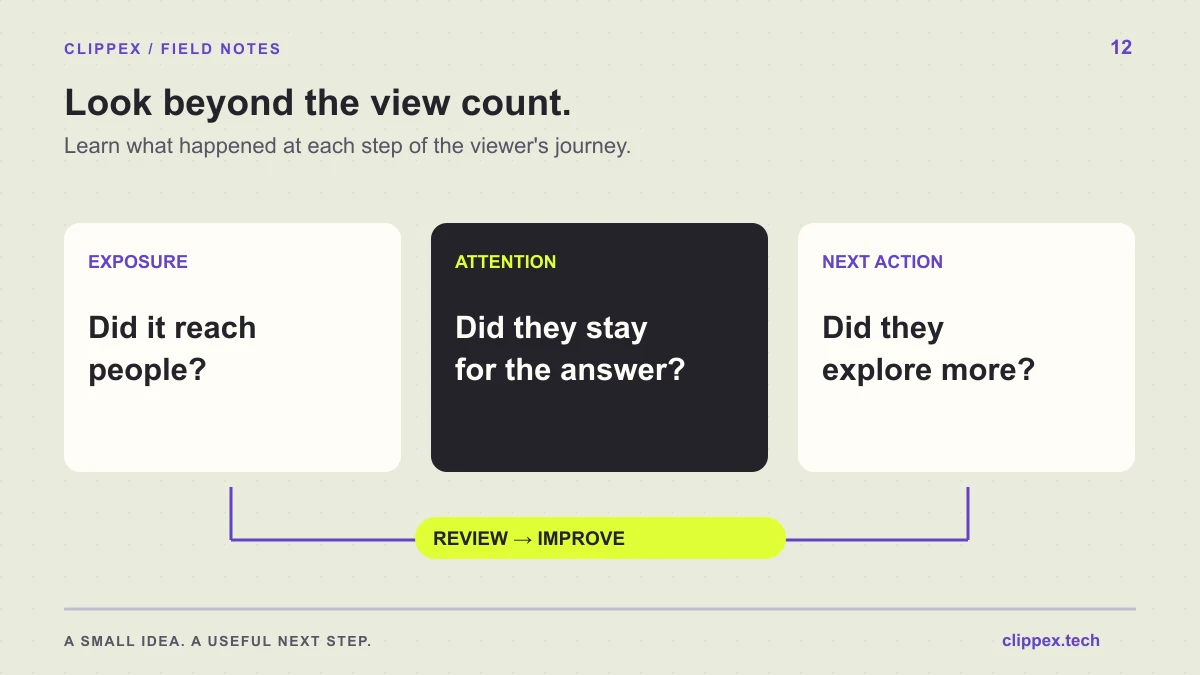
Track exposure, attention and the intended next action separately so you know what to improve.
Write down what a successful post should do
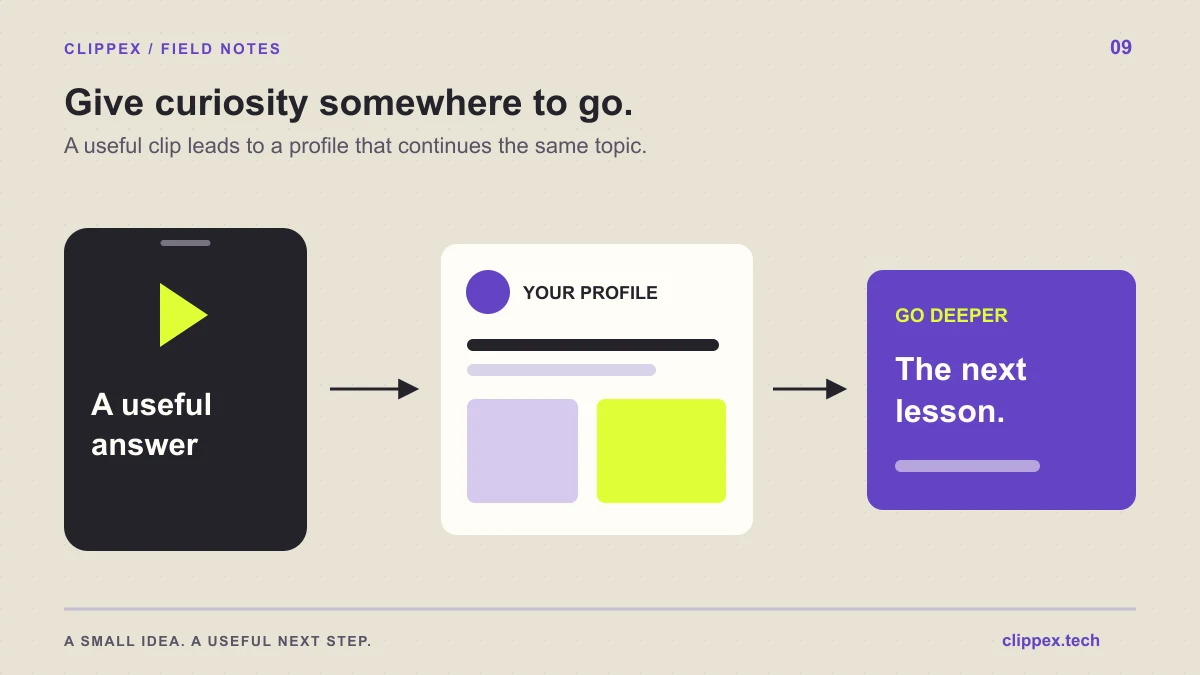
Before publishing, give the clip one primary job. An instructional clip may help viewers complete a task and ask a useful follow-up question. A podcast preview may introduce a specific episode. A product demonstration may send interested viewers to a matching walkthrough.
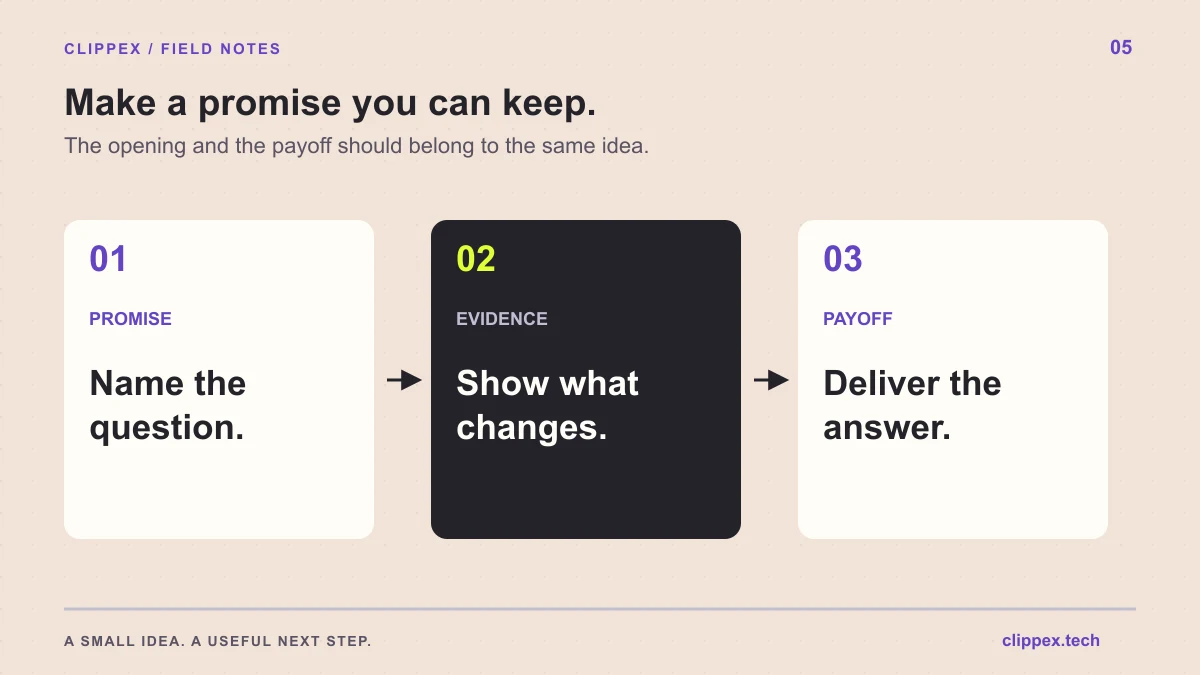
Record the audience question, the payoff and the intended next action beside the post URL. This makes the later review more useful: instead of deciding whether a number looks large, you can ask whether the post served the purpose it was designed for.
Separate exposure, attention and action
Use the metrics available to your account without inventing missing data. Each group describes a different stage of the viewer's experience. A strong result in one group does not automatically prove a strong result in another.
- Exposure: views or reach, using the publishing platform's definition.
- Attention: available watch-time, retention or completion information.
- Relevant response: saves, substantive comments and questions about the topic.
- Next action: profile visits, related-content views or visits to the promised resource where measurable.
Use ratios only when the underlying numbers match
A profile-visit rate can be useful when you have visits attributable to a post and its views for the same period. Divide those profile visits by those views, then multiply by 100. If your account only reports total profile visits, keep that as an account-level observation rather than pretending it belongs to one clip.
Use the same care with clicks and conversions. A tracked destination link can help identify a campaign, but it does not reveal every interaction a viewer had before arriving. Keep the limitations visible in your notes and avoid comparing incompatible metrics between platforms.
Use the pattern to choose the next edit
If viewers leave before the answer, inspect the opening and the delay before the useful point. If they watch but rarely continue, inspect whether the next step is clear and relevant. If they reach the profile but do not explore, inspect the destination and whether it delivers what the clip promised.
Comments can explain what a dashboard cannot. Repeated questions about a term may suggest missing context. Questions about applying the idea in another situation may reveal the next useful lesson. Read these responses alongside the numbers rather than treating them as separate kinds of evidence.
Build a manageable weekly review
Choose a review window that fits your publishing rhythm, then keep it consistent. For example, review each post after the same number of days and keep older posts available for a later look. Avoid comparing a newly published clip with one that has had much longer to accumulate attention.
At each review, select one learning question for the next batch. You might compare two ways of opening the same kind of lesson or two relevant destinations for a topic. Use Clippex to prepare candidate clips from a suitable source, then apply the editorial change deliberately.
- Plan: choose related audience questions and prepare the promised resources.
- Create: review the source, select complete moments and check exports.
- Publish: record the destination, post text and intended next action.
- Review: compare similar posts and choose one change for the next batch.
Treat small samples as clues, not rules
A single successful or unsuccessful post cannot isolate the effect of your hook, caption style or publishing time. Topic, audience and distribution also vary. Look for repeated patterns across comparable posts before making a large change to your production routine.
Keep the process sustainable. A useful outcome is learning which questions your audience values and which videos help them take a relevant next step. Use that evidence to choose better source material and make clearer clips, rather than letting a view count become the only reason to publish.