Growth
How to Turn Short-Video Views into Relevant Profile Visits
Give short-video viewers a reason to explore your profile. Connect the clip's payoff with a clear bio, useful pinned content and a relevant next step.
Who this is for
Creators who want interested viewers to discover more of their work.
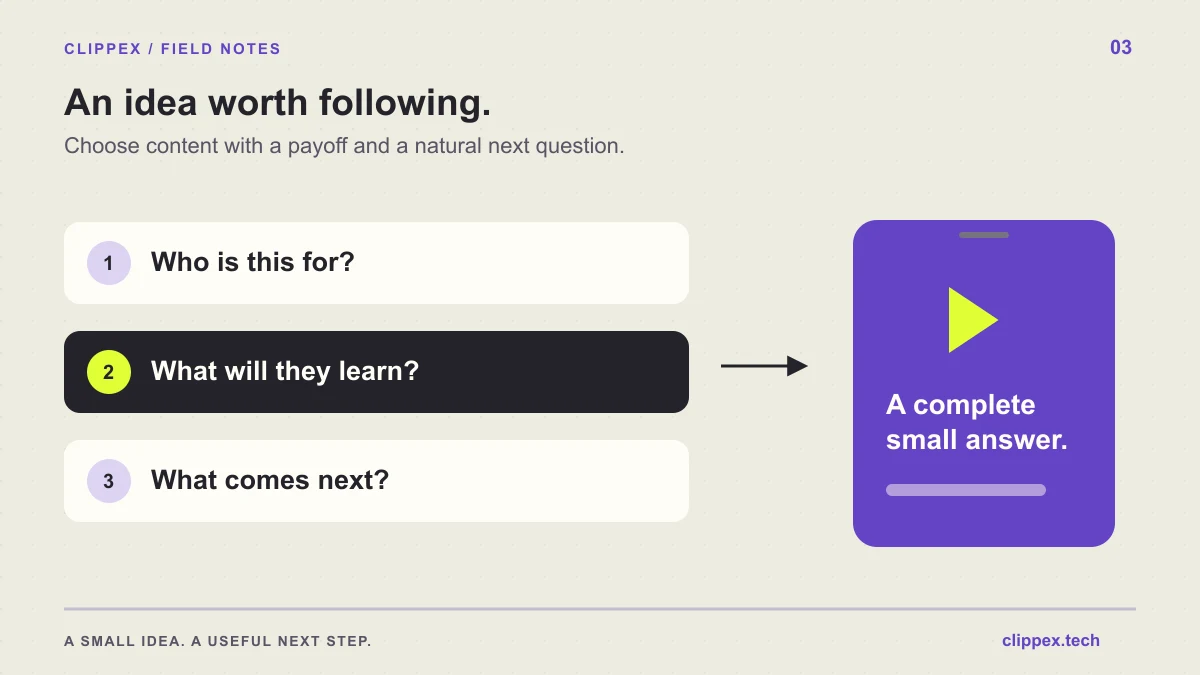
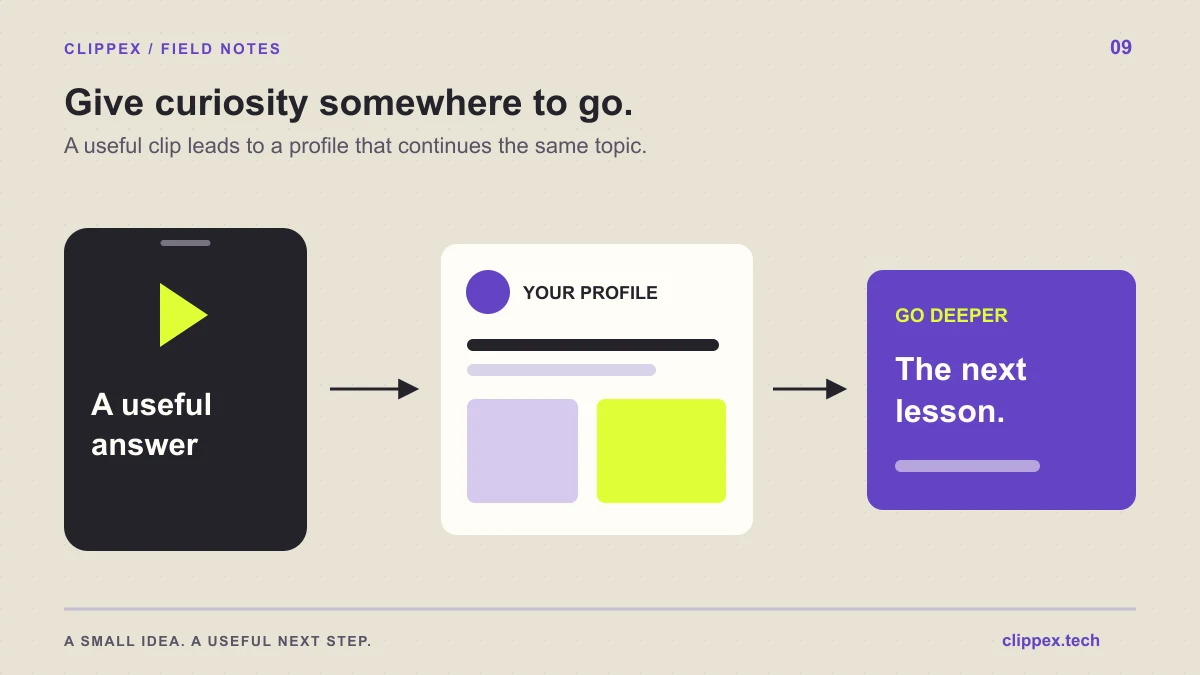
A viewer is more likely to have a reason to explore your profile when the clip helps them with something and your next resource continues that same subject. Design the connection before you publish: the clip makes a clear promise, delivers it and points to a destination that adds specific value.
Make your profile feel like the next page of the same useful conversation.
Give people a concrete reason to continue
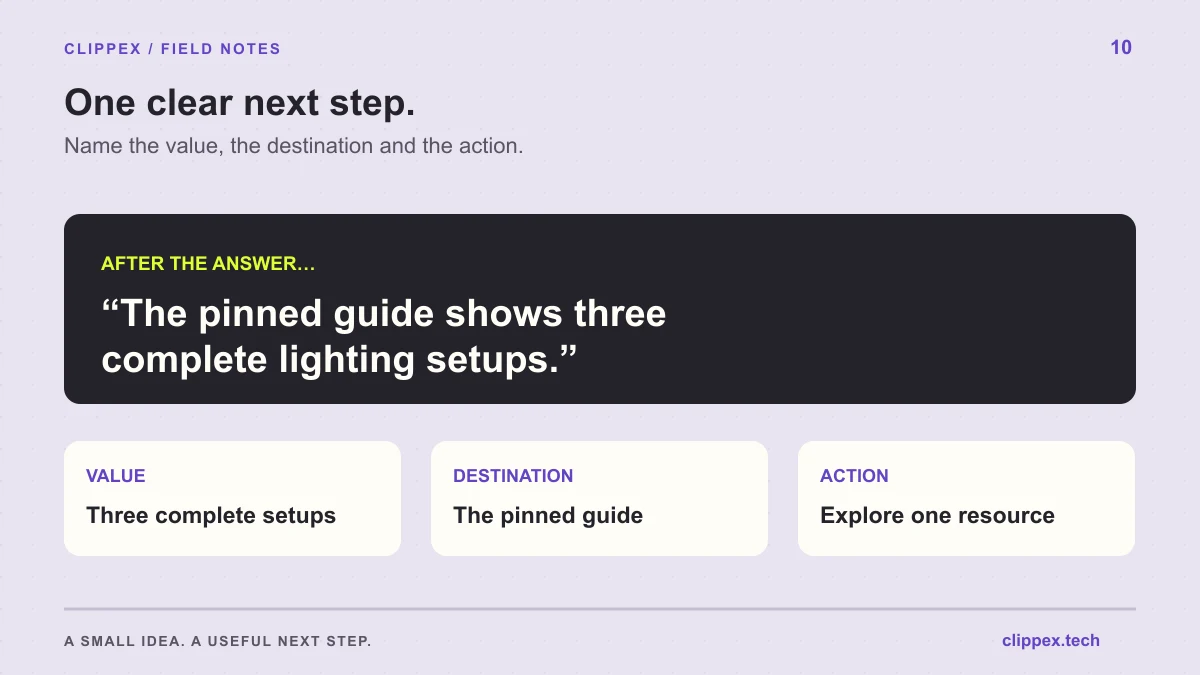
'Visit my profile' names an action but does not explain its value. Tell the viewer what they will find there and why it relates to the answer they just watched. A longer demonstration, a series of examples or a practical checklist makes the destination easier to evaluate.
Start with something the clip already does well. If it explains how to position one light, the next resource could show three complete room setups. If it answers one interview question, the profile could collect a guest-preparation series. The continuation should add depth rather than repeat the same promise.
Make the profile's subject recognizable
Review your bio and visible posts from the perspective of someone arriving for the first time. Can they tell who you help and what kind of material you make? Use specific language that matches your recurring content rather than a collection of broad claims.
A bio such as 'Practical lighting lessons for home video creators' explains more than 'Helping you unlock your potential.' The exact wording depends on your work, but the test is the same: would a person who enjoyed the clip recognize that they are in the right place?
Prepare the destination before asking for the visit
Publish or organize the promised resource first. Use the profile features available to your account to make it easy to find: a pinned introduction, clearly titled related posts or a relevant link. Check the journey from the same kind of device your viewer will use.
Avoid sending every clip to a generic page with many unrelated choices. When one resource is the obvious continuation, name it consistently in the clip, the post text and the destination. Remove or update calls to action when the resource moves.
Build a small cluster of related posts
A profile becomes easier to explore when several posts answer connected questions. For a beginner podcast series, you might cover microphone placement, room noise and opening an interview. Each clip stands alone while the group makes your subject clear.
You can use Clippex to create candidate clips from a single focused recording, then choose the moments that fit the cluster. Do not fill the profile with weak extracts simply to make it look busy. A few distinct, useful explanations give a new viewer more direction than many near-duplicates.
Measure the connection, not just exposure
Where your platform provides the data, compare profile visits with the views for the same post and reporting period. Keep the definition and time window consistent. If only account-level visits are available, do not attribute every visit to a single clip without evidence.
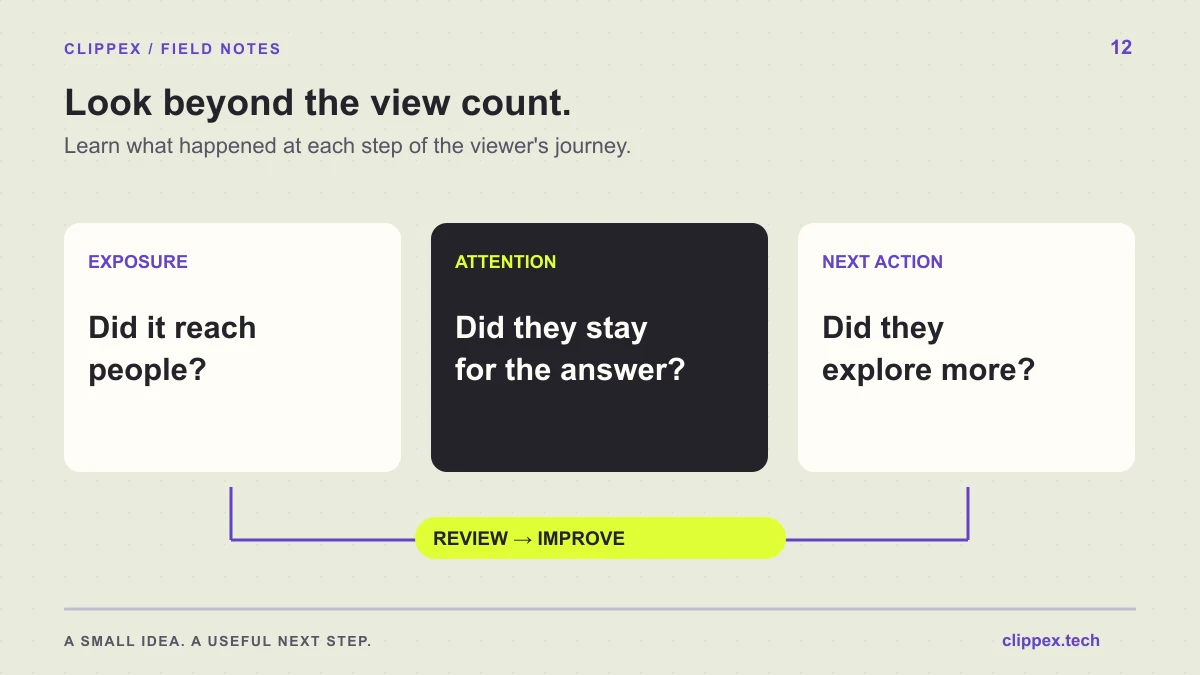
Also look at what happens after arrival: related posts viewed, meaningful follows, relevant comments or visits to the promised resource. Views can help you understand exposure; the later actions help you judge whether the topic and destination belong together.
Fix the weakest part of the journey
If people watch but rarely continue, inspect the reason to visit and how clearly it is expressed. If people arrive but do not explore, inspect the profile and the resource itself. If the audience asks unrelated questions, revisit the content selection and opening promise.
Change one part at a time and compare a group of similar posts. One unusual result can be a useful clue, but it is not enough to establish a reliable pattern. Keep the viewer's question at the center of the next experiment.