Getting started
Who Needs Short-Form Video? A Practical Creator Guide
Find out how creators, podcasters, educators and businesses can use short-form video, choose a useful goal and turn existing recordings into focused clips.
Who this is for
Creators, educators, podcasters and small teams deciding where to start.
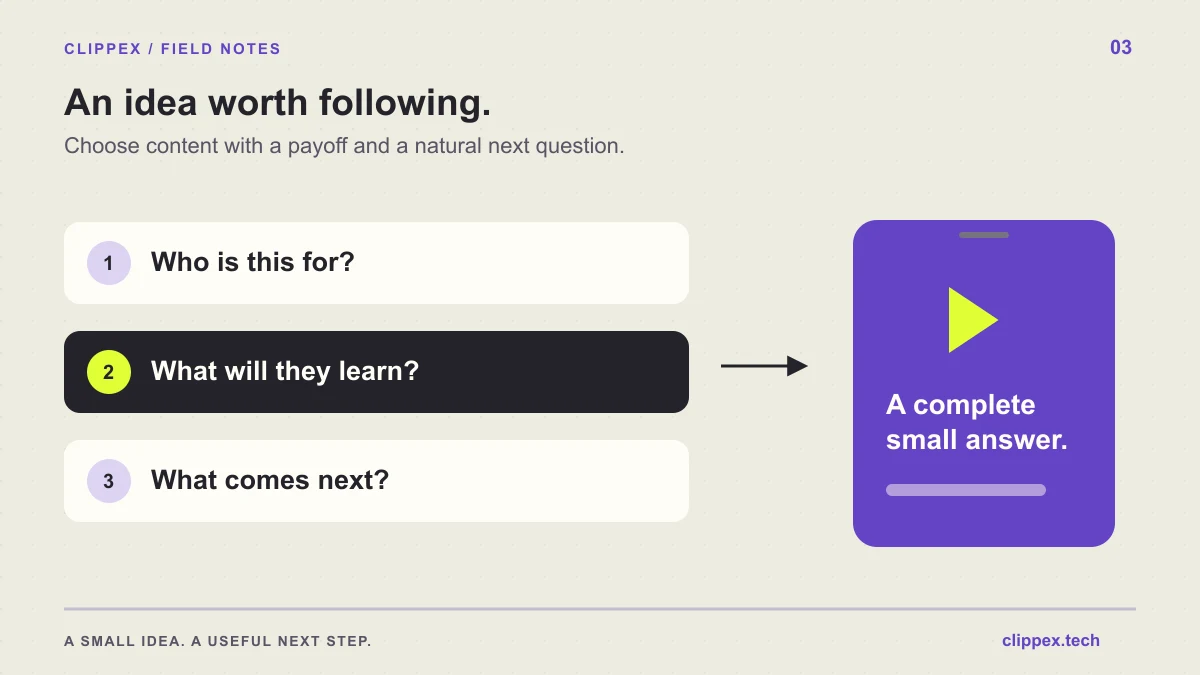
Short-form video is useful when a small, complete idea can introduce someone to a larger body of work. A clip can answer a question, demonstrate a skill or introduce a point of view before a viewer commits to a full episode, course or profile. The first decision is not what to edit. It is who you want to help and what they should do next.
Choose one audience, one useful result and one relevant next step before you choose a clip.
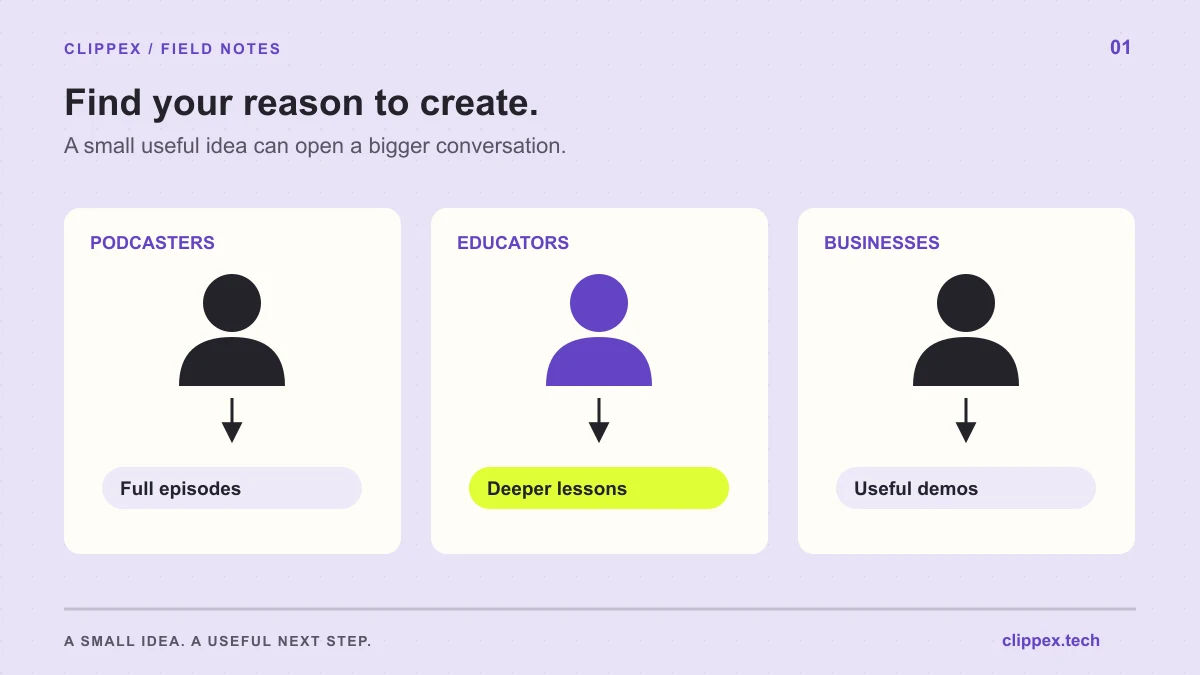
For creators and podcasters: make your work easier to sample
A new viewer may have no reason to start your hour-long conversation. A focused answer lets them hear your style and decide whether the larger discussion interests them. Choose an exchange that communicates an idea even when the audience does not recognize the guest.
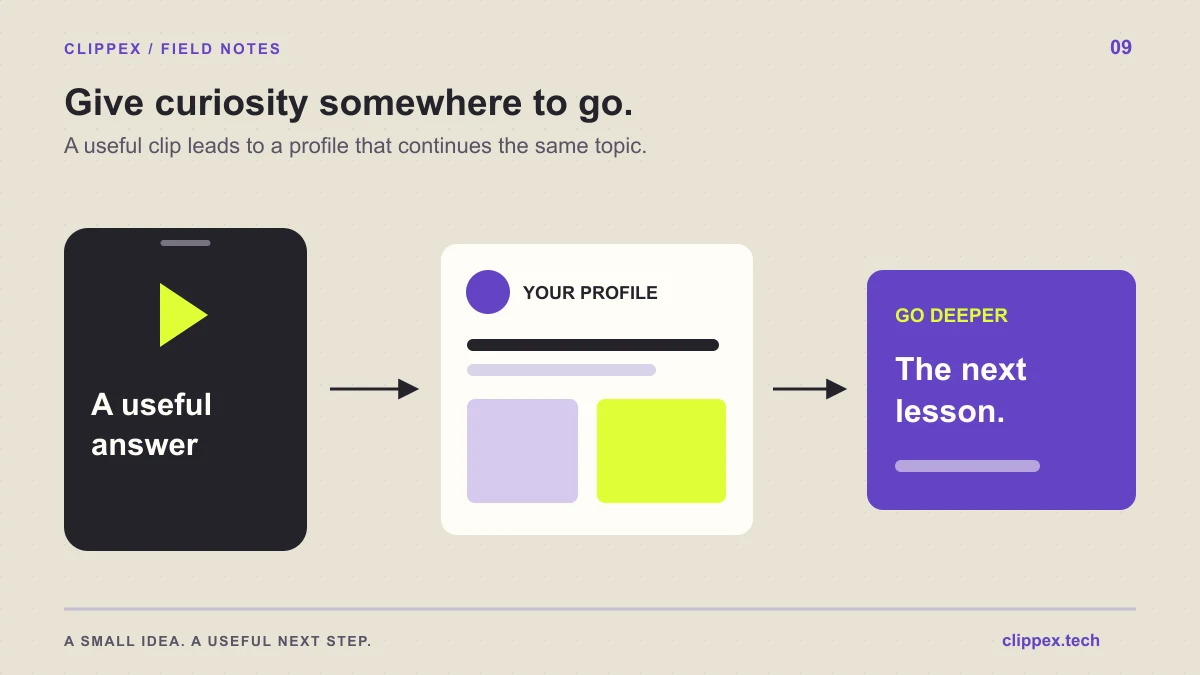
An interview about independent filmmaking might contain a practical explanation of how to find a first location. That clip introduces the guest's experience while giving filmmakers something they can use. The natural next step is the full conversation about producing a first film, not an unrelated request to follow every account you own.
For educators and experts: teach one thing completely
Teachers, coaches and subject specialists can turn a lesson into a clear answer to a beginner's question. A short does not need to summarize the whole lesson. It should resolve one problem well enough that someone trusts you with the next question.
A photography educator could show why a window creates softer portrait light than a ceiling lamp. Show the two results, explain the difference and point to a longer lighting lesson. Avoid withholding the explanation just to force a profile visit; a useful answer is the evidence that your other lessons are worth finding.
For businesses and teams: answer questions before a sales conversation
A product demonstration, webinar or customer interview can contain answers your team repeats every week. Turn those answers into clips for people considering the same problem. A small software team might demonstrate one reporting task; a studio might explain how a project moves from brief to delivery.
Use a source you own or have permission to publish, and confirm that customer details in the recording are intended for public viewing. Keep the explanation concrete. A visible before-and-after workflow tells a potential customer more than broad claims about being innovative.
Match the clip to a goal you can observe
Different goals need different evidence. An educator may value saves and questions about the next lesson. A podcast may look for viewers who continue to an episode. A business may care about relevant visits to a demonstration page. Views describe exposure, but they do not by themselves show that you reached the right audience.
- Discovery: introduce one recurring topic and watch whether viewers explore similar posts.
- Education: solve a small problem and look for specific follow-up questions.
- Consideration: demonstrate a real use case and offer the matching detail page.
- Community: share a clear point of view and invite experiences about that exact topic.
Run a small first experiment
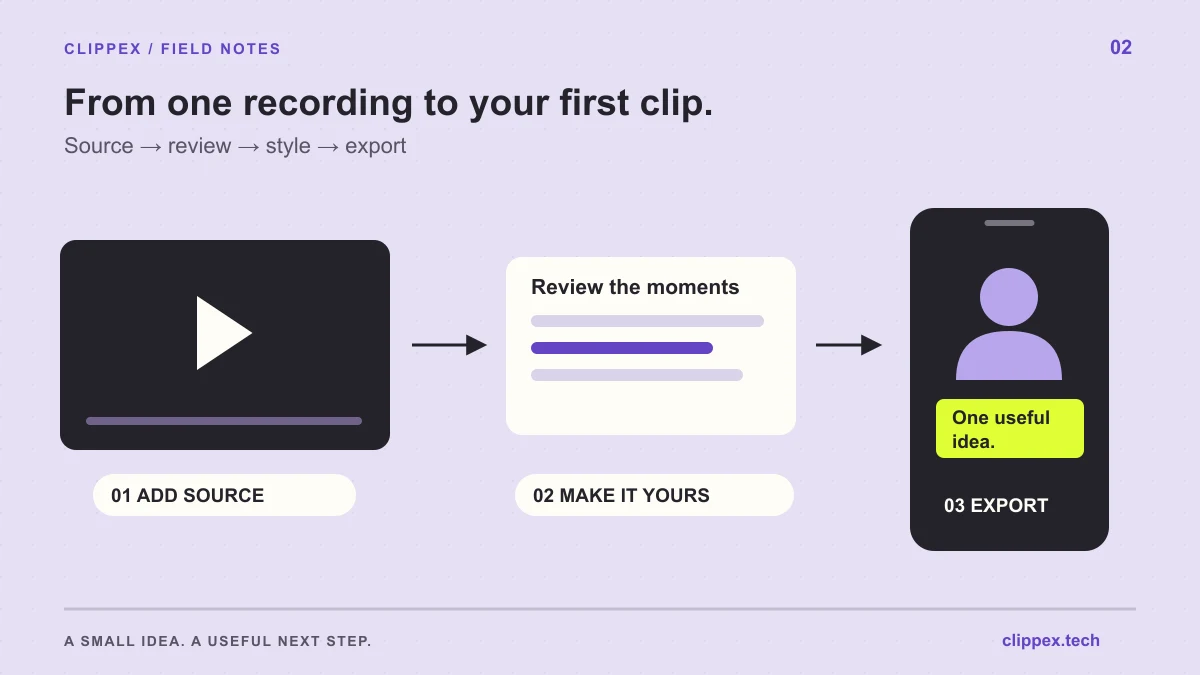
Choose one clear recording and identify three different audience questions inside it. In Clippex, upload the file or use a supported public source link, choose your output settings and review the proposed scenes. Keep only clips that make sense on their own. AI can help locate moments; you still decide whether a moment represents your work.
Publish the clips with a consistent topic and a relevant next step. Record what each clip promised, which question it answered and what viewers did afterward. After the batch, use the most useful questions to decide what to record next. This is a manageable experiment, not a requirement to publish every day.
When a short video is not the best format
Some ideas depend on a detailed visual, a careful qualification or several connected steps. If shortening the material would remove the evidence needed to understand it, keep a longer explanation. You can create a separate short introducing the question without distorting the answer.
Start when you have something useful to show and a destination that continues the same subject. A small library of relevant clips is a better foundation for learning what your audience needs than a large batch of unrelated highlights.